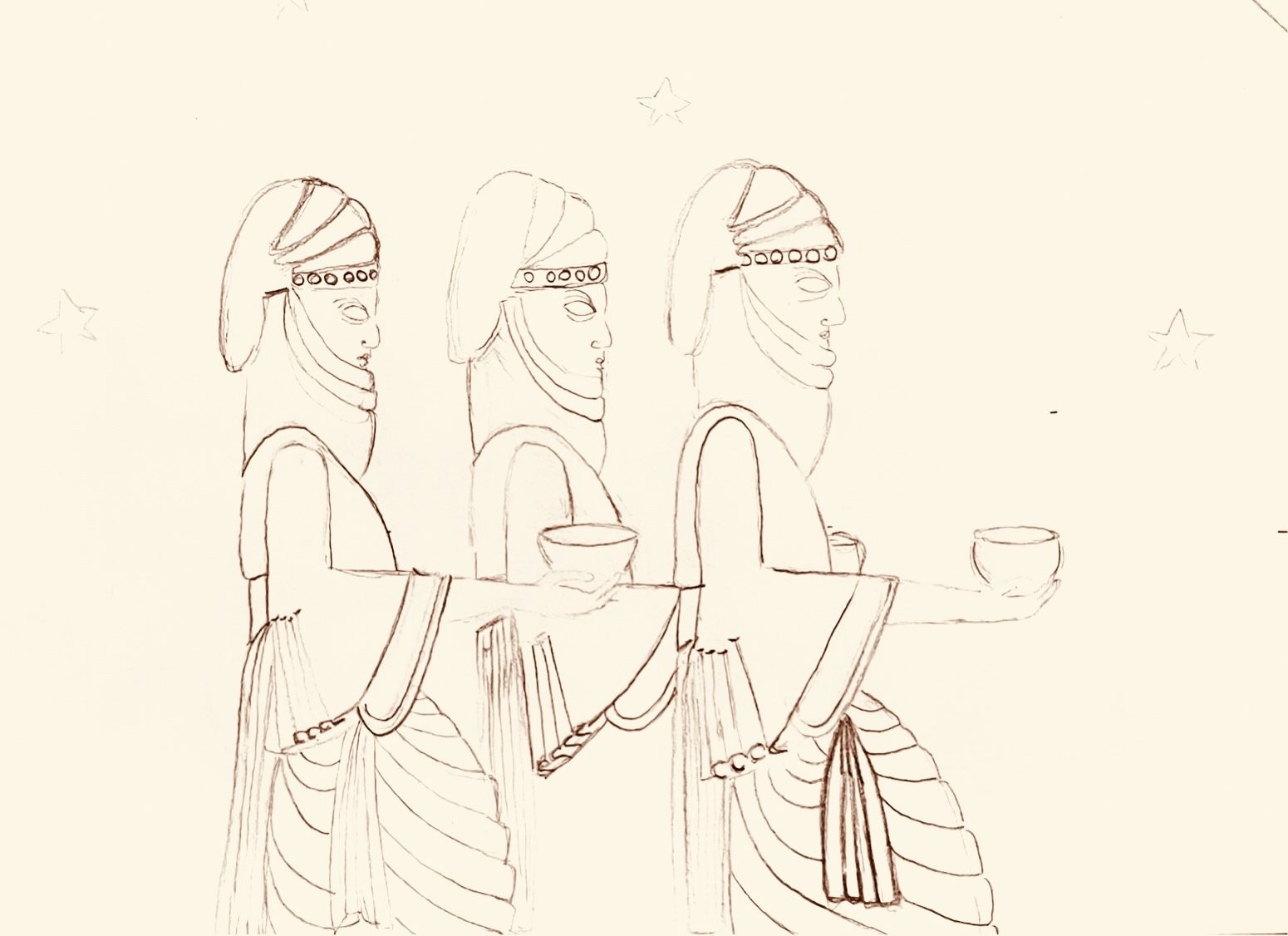
Families rise and fall, and pridefulness and humility wax and wane, two moons dancing around the same hearth. If I could draw how I see late-modern Iranian society (and I admit, my view from here is limited), it would be as a pyramid of piled-up noses all looking down on one another. The Bakhtiari branch of the family grimaces at the Qajari branch (and in one case even denies its Altaic existence). The mercantile bazaaris purse their lips in self-satisfaction at the ruined crumbs of the aristocracy and the underachieving crumbs roll their eyes back at them and groan with languid disdain. The old Tehranis scoff at the new Tehranis and all Tehranis look down their schnozzes at the shahrestanis. The small town shahrestanis distance themselves from the villagers, the dahatis, and the villagers squint their eyes in distrust at the wild, uncouth traveling kowlis. No matter what tier their noses rest on, virtually everyone, even the odd self-proclaimed communist, displays some level of contempt for the amaleh-hammal, the labourer, and the kolfat-nokar, the servant.
They are the great unnamed. The ones who cooked my grandfather’s meals and nursed my grandmother’s children and rocked my mother and my aunt to sleep on their outstretched legs.
Every now and then an unknown face will show up on the peripheries of an old black-and-white photograph. “Our daddy’s adopted children,” an uncle once tried to sell it to me as. An act of charity? Perhaps. Child labour? More likely. Or maybe, every once in a while, as in the case of Mohtaram Khanum, one of our own whose moon was on the wane.
written by Alaleh Mohajerani
first published on Substack on May 19th, 2026

Leave a comment